Test By Phramaha Suraphet

แบบทดสอบออนไลน์วิชาพระพุทธศาสนากับสถานภาพสตรี 20 ข้อ / Buddhism and Women Test 20 Topics

แบบทดสอบออนไลน์วิชาพระพุทธศาสนากับสถานภาพสตรี 20 ข้อ / Buddhism and Women Test 20 Topics


พระมหาสุรเพชร วชิรญาโณ : อาจารย์บรรยายประจำวิชา "พระพุทธศาสนากับสถานภาพสตรี"
Multiple Choice Questions : คำถามแบบปรนัย
คำสั่ง : ให้นิสิตเลือกคำตอบที่ถูกต้องที่สุดเพียงข้อเดียว โดยคลิกติกที่วงกลม
เมื่อทำถึงข้อสุดท้าย ข้อที่ 20 ให้กด submit เพื่อรวมคะแนน

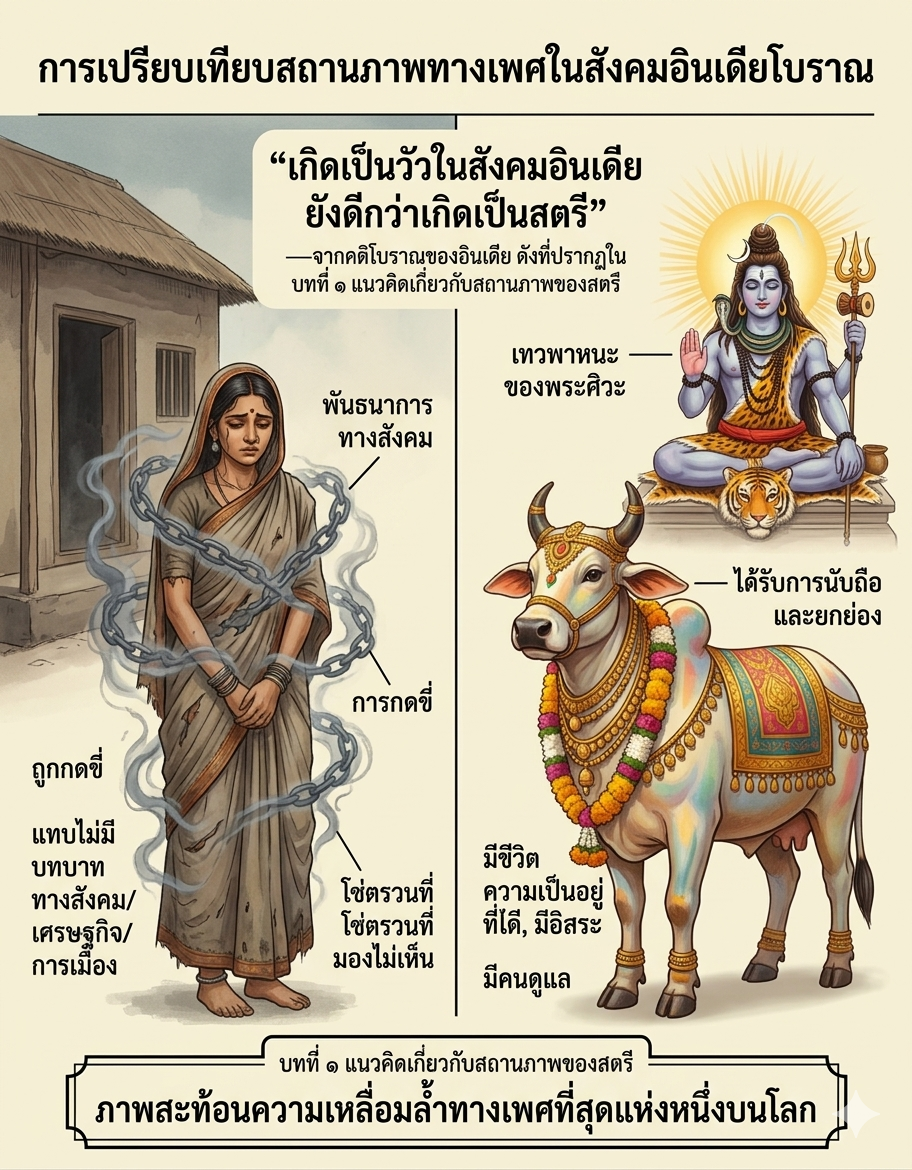
  1. ข้อใดสะท้อนถึงสภาพสังคมอินเดียโบราณตามที่ปรากฏในเนื้อหาได้ชัดเจนที่สุด?


    1. Which of the following most clearly reflects the state of ancient Indian society as presented in the content?
    A. A society with high levels of gender equality.
    B. A society that valued women more than beasts of burden.
    C. A patriarchal society where women had almost no political role.
    D. A society that revered women as deities equal to Lord Shiva.
  2.          
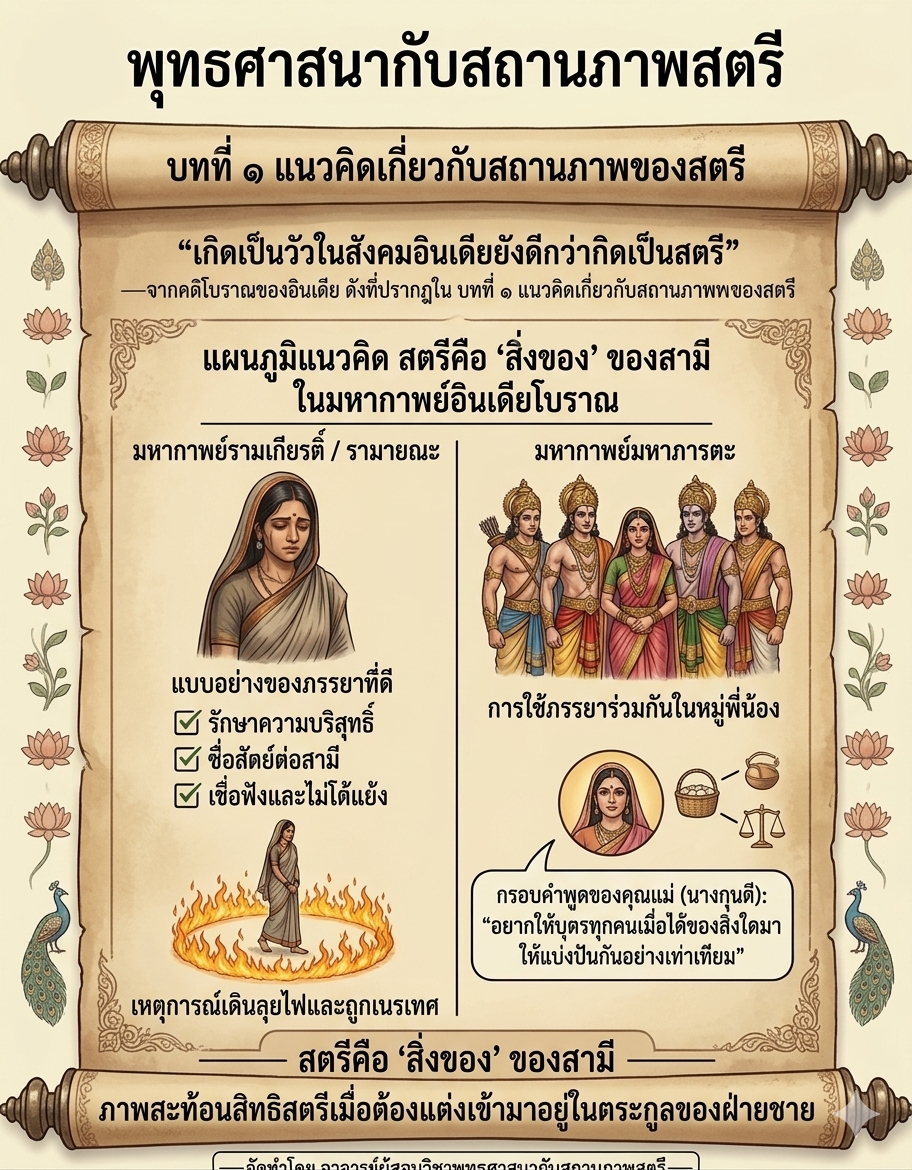
  3. ประโยคที่ว่า “เกิดเป็นวัวในสังคมอินเดียยังจะดีกว่าเกิดเป็นสตรี” มีนัยสำคัญอย่างไร?


    2. What is the significance of the phrase: "To be born as a cow in Indian society is better than to be born as a woman"?
    A. Women in ancient India had less freedom than animals that were granted protection.
    B. Ancient Indians wished for women to be reincarnated as cows.
    C. Cows were left untended, while women were constantly supervised.
    D. Cows held a better economic status than women in every aspect.
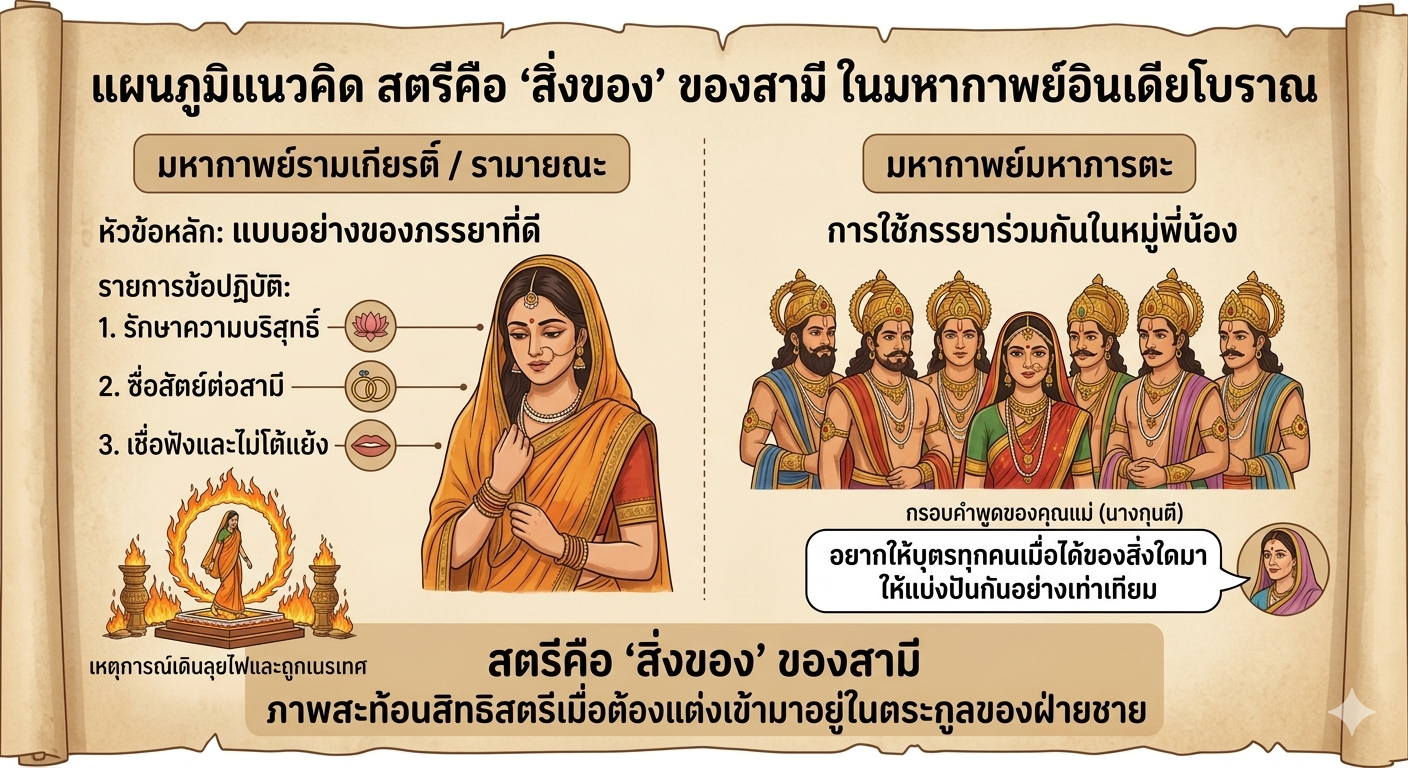
  4. ตัวละคร "นางสีดา" ในมหากาพย์รามายณะ ถูกใช้เป็นแบบอย่างของ "ภรรยาที่ดี" ในด้านใดตามคติฮินดู?


    3. In the Ramayana epic, the character "Sita" is used as a model for a "good wife" in which aspect according to Hindu tradition?
    A. Having the courage to argue with her husband for the sake of righteousness.
    B. Maintaining purity, loyalty, and unquestioning obedience.
    C. Having leadership and playing the primary role in defeating Ravana.
    D. Being a woman who knows how to share resources among siblings.
  5.          
  6. กรณีของ "พระนางเทราปตี" ในมหากาพย์มหาภารตะ สะท้อนสถานภาพของสตรีในลักษณะใด?


    4. The case of "Draupadi" in the Mahabharata epic reflects the status of women in what way?
    A. Women were the ultimate decision-makers in the husband’s family.
    B. Women acted as the mediators of conflicts between the Pandava brothers.
    C. Women held a status equivalent to "property" that could be shared by husbands.
    D. Women were honored by being allowed multiple husbands to demonstrate equality.

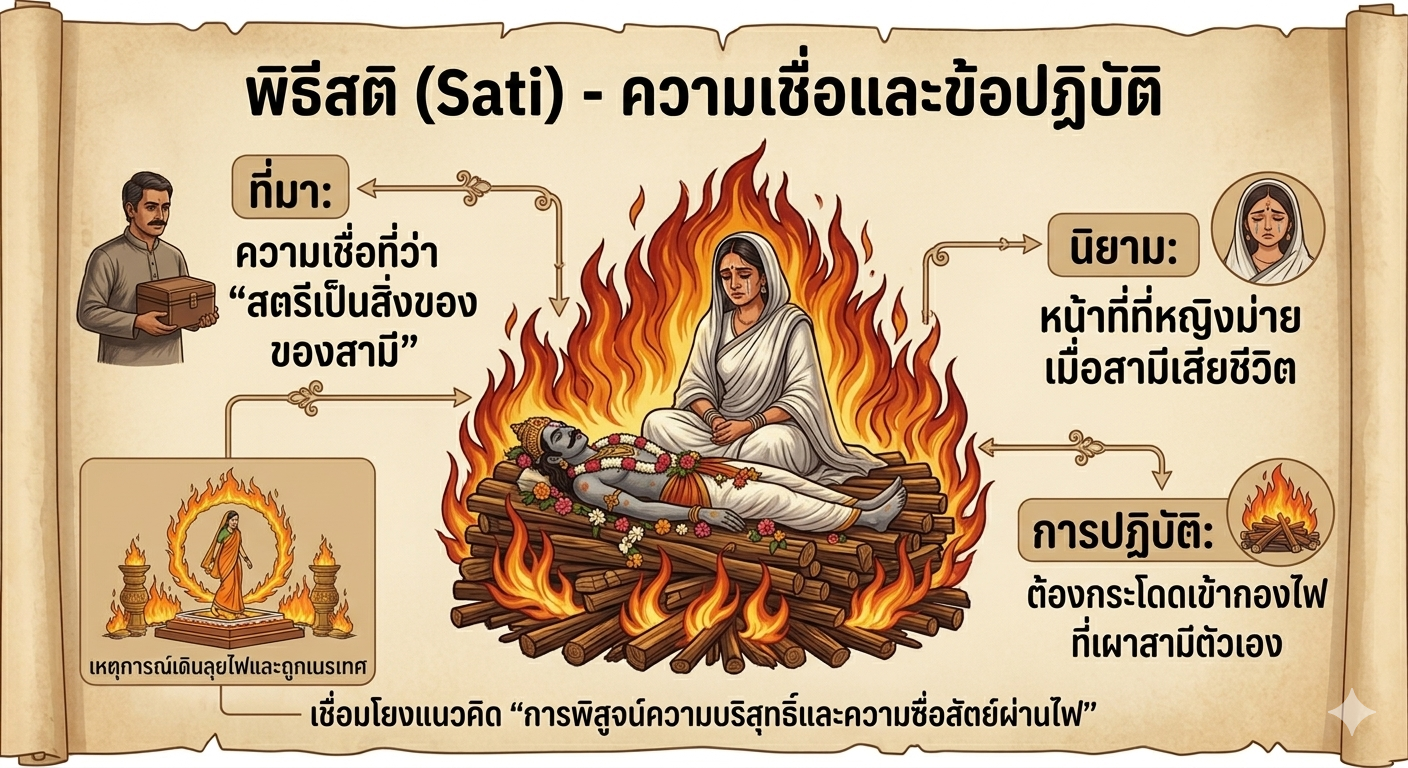
  7. "พิธีสตี" มีความเกี่ยวเนื่องกับความเชื่อในเรื่องใดตามเนื้อหาข้างต้น?


    5. The "Sati rite" (Sati system) is related to which belief according to the aforementioned content?
    A. The duty of a widow to sacrifice her life by jumping into her deceased husband's funeral pyre.
    B. A fire-worship ritual performed to pray for the husband's longevity.
    C. A trial by fire to prove a woman's purity.
    D. A wedding ritual where a woman must vow to serve the husband’s family forever.


  8.          
  9. ตามตำนานการสร้างโลกในภาษาสันสกฤต เหตุใดพระมหาพรหมจึงต้องสร้าง "สตรี" ขึ้นมา?


    6. According to the Sanskrit legend of creation, why did Lord Brahma have to create "Woman"?
    A. To serve as a leader for mankind.
    B. To soften a world that was harsh and lacked gentleness due to having only men.
    C. To fulfill the duty of paying a dowry instead of men.
    D. To serve solely as a representative of diamond-like strength.
  10. วัตถุรวม 22 ชนิดที่พระพรหมนำมาสร้างสตรี สะท้อนภาพลักษณ์ของสตรีในแง่มุมใดชัดเจนที่สุด?


    7. The 22 materials used by Brahma to create woman most clearly reflect which aspect of her image?
    A. Orderliness and strict adherence to rules.
    B. A complexity consisting of sweetness, vulnerability, and deadly venom.
    C. Intellectual superiority over men.
    D. Immortality and unchangeable nature.

  11. "ความตื่นตระหนกและใจเสาะของกระต่าย" และ "ความพิษร้ายของอสรพิษ" ในตำนานการสร้างสตรี สื่อถึงอะไร?


    8. What do the "timidity of the rabbit" and the "venom of the serpent" in the creation legend symbolize?
    A. That women are dangerous and should be avoided.
    B. That women possess a variety of emotions and unpredictable traits.
    C. That women possess more physical strength than wild animals.
    D. That women were created specifically to destroy the world.

  12.          
  13. ในคติความเชื่อเรื่อง "พิธีสตี" วัตถุประสงค์หลักของการกระโดดเข้ากองไฟคืออะไร?


    9. In the belief system of the "Sati Rite," what is the primary purpose of jumping into the fire?
    A. To demonstrate courage superior to that of men.
    B. To serve as a punishment for failing to care for the husband.
    C. To affirm the wife's absolute loyalty and devotion to her husband.
    D. To secure inheritance from the husband’s family.

  14. พิธีสตีถูกยกเลิกไปในช่วงเหตุการณ์สำคัญใดของประวัติศาสตร์อินเดีย?


    10. The Sati Rite was abolished during which significant period of Indian history?
    A. The Gupta Empire.
    B. The peak of the Buddhist era.
    C. The period of British colonial rule in India.
    D. The period when the Ramayana epic was written.


  15. ข้อใดคือ "ความย้อนแย้ง" (Paradox) ที่ปรากฏในนิทานปรัมปราบางเรื่องตามเนื้อหาในภาพ?


    11. Which of the following is a "Paradox" found in some traditional myths according to the content?
    A. Teaching women to be educated but forbidding them from working.
    B. Preaching the value of chastity while depicting sexual harassment of women as a normal occurrence.
    C. Honoring women as deities but allowing them to lead armies.
    D. Teaching men to pay a dowry, while in reality, the women are the ones who pay.

  16.          
  17. . ในระบบการแต่งงานของสังคมอินเดียตามเนื้อหา "ฝ่ายหญิง" ต้องเป็นฝ่ายจ่ายสินสอดเพราะเหตุผลใด?


    12. In the Indian marriage system described, why must the "bride's side" be the one to pay the dowry?
    A. Because women have more stable incomes and careers.
    B. Because it is viewed as compensation for the man taking the woman in to be cared for within his household.
    C. Because it is a way to purchase the husband to be a servant in her home.
    D. Solely to display the wealth of the woman's family.

  18. ทัศนคติที่ว่า "สตรีไม่มีอาชีพ ทำหน้าที่เป็นแม่บ้านเท่านั้น" ส่งผลกระทบอย่างไรต่อสถานภาพสตรี?


    13. How does the attitude that "women have no career and serve only as housewives" impact the status of women?
    A. It provides women more free time to study the Dhamma.
    B. It forces women to depend entirely on their husbands and his family for survival.
    C. It gives women the ultimate power over household financial decisions.
    D. It creates equality through a fair division of labor.

  19. การที่สังคมอินเดียผลักดันให้ลูกสาว "มีสามีโดยเร็ว" มีสาเหตุมาจากแนวคิดใด?


    14. The social pressure in India for daughters to "marry early" stems from which concept?
    A. The belief that a woman can only survive and prosper if she has a good family.
    B. To allow daughters to pursue higher education sooner.
    C. To reduce the burden of the dowry payment for the parents.
    D. To allow the daughter to become a leader in her husband’s family.

  20. ภาพรวมของเนื้อหาทั้ง 3 หน้า สะท้อนความสัมพันธ์ระหว่างเพศอย่างไร?


    15. Overall, what do these three pages reflect regarding gender relations?
    A. Men and women have equal rights and duties in every respect.
    B. The roles and values of women are defined through a male-centric lens and a state of dependency.
    C. Women are the gender with superior economic power over men.
    D. Religion and mythology play no part in determining the status of women.


  21.          
  22. นอกจากวัตถุรวม 22 ชนิดแล้ว พระพรหมยังได้นำ "ดวงใจของสัตว์" ชนิดใดบ้างมาเป่าเสกใส่ในตัวสตรี?


    16. In addition to the 22 types of materials, which "animal hearts" did Lord Brahma breathe into the essence of woman?
    A. Lion, Dog, Cat
    B. Lion, Dog, Monkey
    C. Gajasimha (Elephant-Lion hybrid), Monkey, Peacock
    D. Tiger, Dog, Rabbit

  23. คำว่า "อิตถี" หรือ "อิตถีเพศ" เป็นคำเรียกสตรีที่มาจากภาษาใด?


    17. The term "Itthi" or "Itthi-phet" (the female gender) is derived from which language?
    A. Sanskrit
    B. Tamil
    C. Pali
    D. Ancient Thai

  24. พจนานุกรม ฉบับราชบัณฑิตยสถาน พ.ศ. 2542 ให้ความหมายของคำว่า "สตรี" ไว้อย่างไร?


    18. According to the Royal Institute Dictionary B.E. 2542 (1999), how is the word "Satri" (Woman) defined?
    A. The master of the household.
    B. The noble gem and merit-partner of man.
    C. A woman or the female sex as a counterpart to man.
    D. One who is willing to die following her husband.

  25.          
  26. ในสมัยก่อนพุทธกาล คำว่า "สตรี" มีรากฐานมาจากจารีตประเพณีใดของพราหมณ์?


    19. In the pre-Buddhist era, the foundations of the word "Satri" were rooted in which Brahminical tradition?
    A. Allowing women to become female monastics.
    B. The requirement for a wife to jump into the funeral pyre to die with her husband.
    C. The requirement for women to shave their heads upon reaching age 20.
    D. The practice of women choosing their own husbands.

  27. คำว่า "สมร" ในบริบทของจารีตโบราณตามเนื้อหา มีความหมายว่าอย่างไร?


    20. In the context of the ancient traditions mentioned in the text, what does the word "Samorn" signify?
    A. One who possesses elegance and grace.
    B. One who is the beloved of her husband.
    C. One who dies together (dying after the husband in the fire).
    D. One who is knowledgeable in the Vedas.


  28.          
                            
    หมูเด้ง และ พระมหาสุรเพชร วชิรญาโณ ขออวยพรให้ได้คะแนนเยอะๆนะครับ
    กด Submit เพื่อตรวจคะแนนครับ